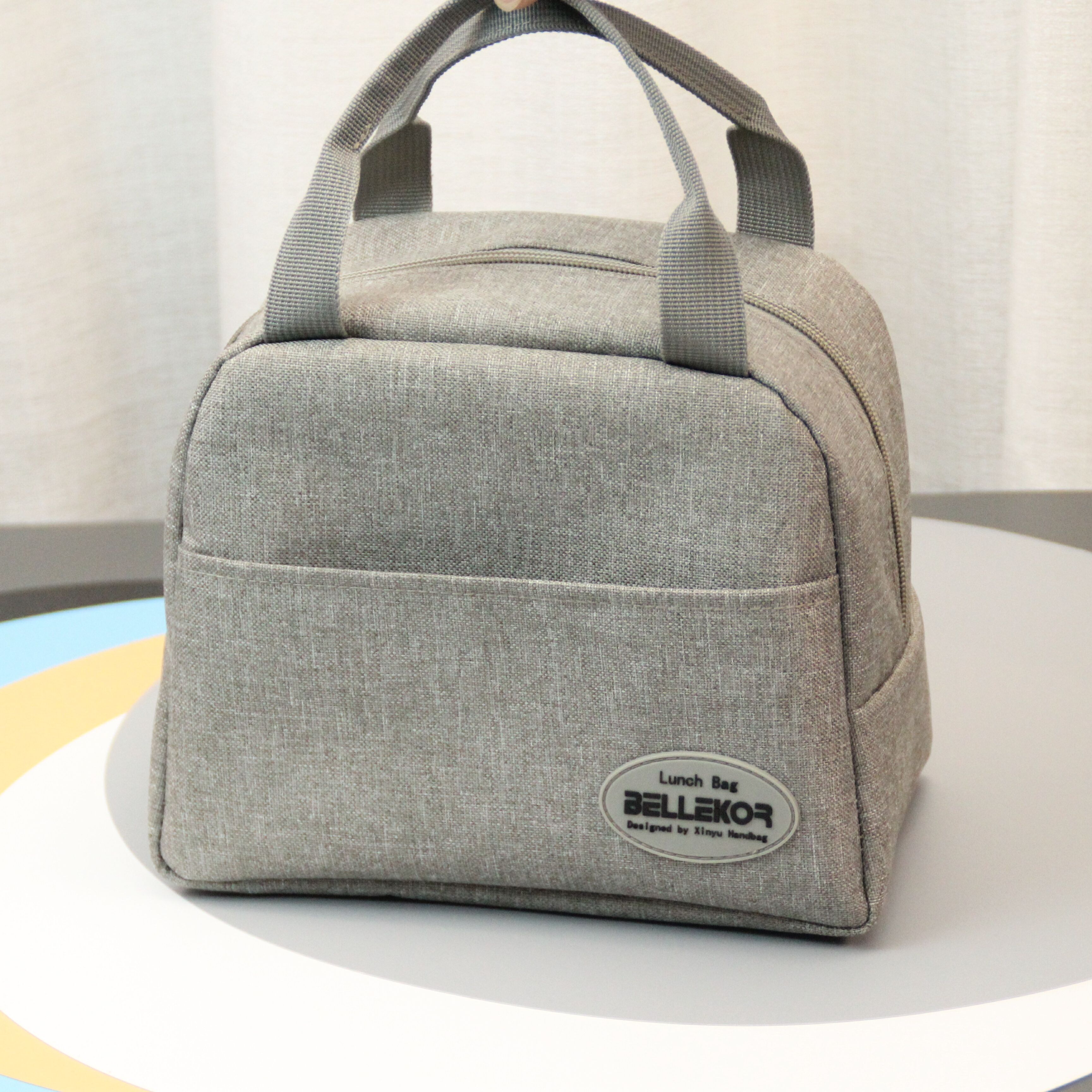
[Shenzhen Xinyu Handbag Co., Ltd. Industry Knowledge] In high-end handbag customization, the presentation of the brand logo directly determines the product's quality and brand recognition. Hot stamping, as a core means of enhancing the logo's sophistication, often presents a challenge for brands due to the wide variety of materials and techniques available. Shenzhen Xinyu Handbag Co., Ltd., with years of experience in handbag customization and over a thousand cases of hot stamping practice, breaks down the key points and matching logic for hot stamping material and technique selection, helping brands precisely create their own unique and high-quality logos.
I. Core Knowledge Points: Differences in the Characteristics of Hot Stamping Materials and Processes
1. Hot Stamping Materials: Choosing the Right Foil is Key
The core material for hot stamping is the hot stamping foil, which consists of a base film, release layer, color layer, electroplating layer, and adhesive layer. Different materials have significantly different gloss, abrasion resistance, and suitable application scenarios. Xinyu Handbags commonly uses the following materials and their characteristics:
- Metallic Foil: The most classic hot stamping material, divided into gold foil, silver foil, and colored metallic foil (red, blue, copper, etc.). Gold foil is further divided into bright gold and matte gold. Bright gold has a full luster and is suitable for high-end gift handbags and luxury brand logos, highlighting a sense of luxury; matte gold has a warm texture and is suitable for retro and minimalist handbags, avoiding a ostentatious look under strong light. Xinyu uses imported metallic foil with uniform color layer thickness. After a friction test (500 cycles), there was no significant foil peeling, and the adhesion meets the industry's level 4 standard. Silver foil possesses an inherent cool, sophisticated feel, suitable for tech-inspired and accessible luxury handbags, and its contrast is even stronger when paired with dark fabrics.
- Laser foil: With a multi-colored reflective surface, available in regular and iridescent laser finishes, it offers strong visual impact, ideal for young, fashionable brands and promotional handbags, quickly attracting attention. However, it's important to note that laser foil is slightly less abrasion-resistant than metal foil, and is not recommended for frequently rubbed corners of handbags. Xinyu typically recommends using it for the main logo area, with corners reinforced using other techniques.
- Brushed/Frosted foil: Brushed foil features a metallic brushed texture, offering a delicate and layered feel, suitable for industrial and business-style handbags; frosted foil lacks a strong sheen, presenting a matte, matte finish, suitable for minimalist designs and high-end work bags. Both offer good abrasion resistance and are not prone to fingerprints, making them versatile for everyday use.
- Special function foils: Including luminous foil, thermochromic foil, and perforated foil, suitable for personalized customization needs. 1. Luminous foil glows in the dark, suitable for niche designer brands; thermochromic foil changes color with temperature, offering strong interactivity but weaker stability, requiring prior testing for compatibility; stencil foil allows for perforated logo hot stamping, creating a layered effect when combined with the fabric background, which Xinyu often uses for creative logo designs on canvas and PU fabrics.
2. Hot Stamping: Choosing the Right Method Based on Fabric and Logo Shape
The core of hot stamping is transferring foil to the fabric surface through high temperature and pressure. Different processes are suitable for different fabrics and logo shapes. Xinyu handbags' mainstream processes and application scenarios are as follows:
- Flat Stamping: The most basic and commonly used process, producing a smooth stamped surface, simple operation, and suitable for most fabrics (Oxford cloth, canvas, PU, genuine leather, etc.), ideal for text and simple graphic logos. In practical application, Xinyu adjusts parameters for different fabrics: For PU fabric, the hot stamping temperature is controlled at 120-140℃, and the pressure at 3-5kg to avoid damaging the coating with high temperatures; for canvas fabric, due to its thicker texture, the temperature is increased to 150-160℃, and the pressure to 5-7kg to ensure complete foil adhesion.
- Embossing: Using a combination of embossing and debossing molds, the hot stamped logo achieves a three-dimensional raised effect, resulting in a stronger texture, suitable for high-end handbags and gift boxes. This process requires high mold precision; Xinyu uses CNC engraving molds with an error controlled within 0.1mm to ensure smooth logo edges and a uniform three-dimensional effect. Embossing is more suitable for smooth fabrics such as PU and genuine leather; the three-dimensional effect will be slightly diminished on canvas due to its rough texture.
- Cutout Hot Stamping: Combining a cutout mold, hot stamping is applied only to the logo outline or designated areas, allowing for a layered design of "hot stamping + fabric background color," offering high creativity. Suitable for complex graphics and irregular logos, Xinyu recommends using light-colored fabrics to create a striking contrast between the background color of the cutout and the gold foil, enhancing recognizability. Note that cutout hot stamping requires high precision; small areas are prone to rough edges, so prior sampling and testing are necessary.
- Partial Hot Stamping/Gradient Hot Stamping: Partial hot stamping applies gold foil to only a portion of the logo, leaving the rest of the fabric in its natural color. This is suitable for logos with multiple elements. Gradient hot stamping achieves a gradient effect from dark to light by adjusting the thickness of the foil layering, creating rich visual depth and is suitable for fashion brands. Both require precise control of the stamping path and temperature. Xinyu uses an intelligent hot stamping machine that can accurately position the stamping area, avoiding deviations.
II. Factory Process Photos: Unlocking the Core Aspects of Logo Hot Stamping
The stability of the hot stamping effect depends on standardized processes and meticulous attention to detail. The following are real-life photos showcasing the hot stamping process at Shenzhen Xinyu Handbag Co., Ltd., visually demonstrating the key steps from preparation to finished product:
1. Flat Ironing Process Demonstration
III. Practical Selection Suggestions: Precise Matching Based on Brand Needs
Based on Shenzhen Xinyu Handbag Co., Ltd.'s customization experience, we provide recommendations on matching hot stamping materials and processes for different brand positioning and fabric types, avoiding common pitfalls:
- High-end gift handbags (Brand tone: Luxurious, High-quality): Choose 16 oz canvas or water-based PU fabric. For hot stamping, prioritize imported bright/matte gold foil, using embossed techniques to highlight a three-dimensional, high-end feel. If using genuine leather, we recommend flat ironing at a slightly lower temperature (110-120℃) to avoid damaging the leather.
- Stylish Commuter Handbags (Brand Tone: Simple, Individualistic): 600D Oxford cloth and frosted PU fabrics are recommended. Materials can include brushed foil and frosted foil. Use partial or gradient ironing for a differentiated design. Younger brands can try holographic foil + perforated ironing to enhance visual appeal.
- Industrial/Outdoor Handbags (Brand Tone: Rugged, Durable): 1680D Oxford cloth and coarse canvas fabrics are recommended. Use abrasion-resistant metal foil (copper foil, bright silver foil) for a flat ironing process to ensure strong adhesion and abrasion resistance, avoiding the poor effect of embossed ironing due to rough fabric.
- Low-Cost Promotional Handbags (Requirements: Cost-Effectiveness, Eye-Catching): Use ordinary metal foil (domestic gold foil, silver foil) for a flat ironing process, suitable for 8oz canvas and ordinary PU fabrics. Avoid complex processes such as holographic foil and gradient ironing to control customization costs while ensuring a clear and legible logo.
Tips to avoid pitfalls: ① Canvas fabric needs to be shaped before hot stamping to prevent rough textures that can lead to missed areas or frayed edges; ② For PU fabrics that are easily damaged by high temperatures, prioritize low-temperature hot stamping foil (100-120℃) and avoid blindly increasing the temperature; ③ For small font logos (less than 1cm), embossing or gradient stamping is not recommended as it can easily result in blurred details. Flat stamping is the best choice.
Shenzhen Xinyu Handbag Co., Ltd. focuses on "precise process adaptation + stable and controllable quality," providing hot stamping sampling and customization services for different fabrics and brand needs, controlling the entire process from material selection to process implementation. Mastering the above hot stamping knowledge will allow your brand logo to accurately convey its style and enhance the quality of your handbags.

 EN
EN
 Hot News